List Endpoints That Only Return Authorized Rows
How SqlOS FGA turns EF Core list queries into authorized SQL Server queries, using the Todo sample resource tree and BuildFilterAsync.
By Ross Slaney
Most authorization bugs do not start with a dramatic exploit. They start with a list endpoint.
The detail endpoint has a check:
if (!await CanEdit(subjectId, documentId))
    return Results.Forbid();
But the list endpoint quietly returns too much:
var todos = await db.TodoItems
    .Where(x => x.OwnerSubjectId == subjectId)
    .OrderBy(x => x.CreatedAt)
    .ToListAsync();
That works until the product adds teams, shared workspaces, organization admins, contractors, or nested resources. Then owner_id = @uid turns into copied filters, special cases, and post-query trimming. The user should only see rows they can access, and pagination should still be done by the database.
SqlOS FGA is built for that exact list endpoint.
Authorized rows are filtered before pagination
The endpoint builds a normal EF query, then adds a SqlOS authorization expression. SQL Server evaluates the TVF predicate with your business filters, sort, and page size.
Token subject
- sub: user_123
- org: acme
- permission: TODO_READ
EF Core
- .Where(filter)
- .OrderBy(...)
- .Take(20)
SQL Server
- Walk resource ancestors
- Match active grants
- Return authorized rows
Point checks are not enough
A point check answers one question:
Can this user edit this one todo?
A list filter answers a different question:
Which todos can this user read, sorted and paged like any other query?
Those are not interchangeable. If you load 500 rows and then call a permission service 500 times, you have already over-fetched data and broken pagination. Page 1 might shrink to three visible rows. Page 2 might include records that should have been on page 1. Search counts become misleading.
The authorization predicate has to be inside the query.
Why owner_id breaks
The Todo sample starts intentionally small, but even it models the problem better than owner_id.
The resource hierarchy is:
root
  tenant::{subjectId}
    todo::{todoId}
The grant is on the tenant root:
subject user_123
  has role tenant_owner
  on resource tenant::user_123
The role includes:
TENANT_CREATE_TODO
TODO_READ
TODO_WRITE
Every child todo inherits access from the tenant resource. The sample could add shared projects or organization workspaces later without changing the list endpoint shape. The row points to a resource, and the resource tree explains who can see it.
The Todo item describes its FGA resource
Every protected entity implements ISqlOSResourceEntity. The stored ResourceId remains the bridge for SQL query filtering, while the other properties tell SqlOS how to maintain the backing FGA resource:
using SqlOS.Fga.Interfaces;
using SqlOS.Todo.Api.Services;

public sealed class TodoItem : ISqlOSResourceEntity
{
    public Guid Id { get; set; }
    public string ResourceId { get; set; } = string.Empty;
    public string OwnerSubjectId { get; set; } = string.Empty;
    public string Title { get; set; } = string.Empty;
    public bool IsCompleted { get; set; }
    public DateTime CreatedAt { get; set; }
    public DateTime? CompletedAt { get; set; }

    public string ResourceTypeId => TodoFgaService.TodoResourceTypeId;
    public string ResourceName => Title;
    public string? ParentResourceId => TodoFgaService.GetTenantResourceId(OwnerSubjectId);
    public string? ResourceDescription => null;
    public bool ResourceIsActive => true;
}
The todo row can still have app-specific columns, indexes, and constraints. SqlOS uses ResourceId to compose the authorization predicate and uses the entity-backed resource contract to sync the FGA resource row during SaveChangesAsync.
The DbContext maps the SQL function
The Todo sample context derives from SqlOSDbContext<TContext>, which registers the SqlOS EF model and TVF mapping:
public sealed class TodoSampleDbContext(DbContextOptions<TodoSampleDbContext> options)
    : SqlOSDbContext<TodoSampleDbContext>(options)
{
    public DbSet<TodoItem> TodoItems => Set<TodoItem>();

    protected override void OnApplicationModelCreating(ModelBuilder modelBuilder)
    {
        modelBuilder.Entity<TodoItem>(entity =>
        {
            entity.HasKey(x => x.Id);
            entity.Property(x => x.ResourceId).HasMaxLength(450).IsRequired();
            entity.HasIndex(x => x.ResourceId).IsUnique();
        });
    }
}
SqlOS creates the backing SQL Server function during host startup. EF Core can then translate a normal LINQ expression into SQL that calls the inline table-valued function.
Before and after
The fragile version asks the app table to carry all authorization meaning:
var items = await dbContext.TodoItems
    .AsNoTracking()
    .Where(x => x.OwnerSubjectId == currentSubjectId)
    .OrderBy(x => x.IsCompleted)
    .ThenBy(x => x.CreatedAt)
    .ToListAsync();
That is okay only while each todo has one owner and no sharing. The SqlOS version asks FGA for a query predicate:
var filter = await fgaAuthService.BuildFilterAsync<TodoItem>(
    subjectId,
    TodoFgaService.TodoReadPermission);

var items = await dbContext.TodoItems
    .AsNoTracking()
    .Where(filter)
    .OrderBy(x => x.IsCompleted)
    .ThenBy(x => x.CreatedAt)
    .Select(x => new
    {
        x.Id,
        x.ResourceId,
        x.Title,
        x.IsCompleted,
        x.CreatedAt,
        x.CompletedAt
    })
    .ToListAsync(cancellationToken);
That filter composes with search, sort, projection, and pagination. It does not load unauthorized rows into memory first.
Creating rows and resources together
When a todo is created, the app creates the domain row with a stable ResourceId. SqlOSDbContext<TContext> creates the backing FGA resource in the same SaveChangesAsync call:
var todoId = Guid.NewGuid();
var item = new TodoItem
{
    Id = todoId,
    ResourceId = TodoFgaService.GetTodoResourceId(todoId),
    OwnerSubjectId = todoContext.SubjectId,
    Title = request.Title.Trim(),
    CreatedAt = DateTime.UtcNow
};

dbContext.TodoItems.Add(item);
await dbContext.SaveChangesAsync(cancellationToken);
The tenant root is the one resource in this sample that is not backed by a domain entity, so the service provisions it explicitly and keeps grants explicit:
await _context.ProvisionResourceWithIdAsync(
    tenantResourceId,
    TodoFgaService.TenantResourceTypeId,
    displayName,
    "root",
    $"Todo tenant for {subjectId}",
    isActive: true,
    cancellationToken);

await _context.GrantRoleAsync(
    subjectId,
    tenantResourceId,
    TodoFgaService.TenantOwnerRole,
    cancellationToken);
That is the practical advantage of keeping app data and authorization data in the same database. If the business write fails, the resource write fails with it. If the resource cannot be created, the todo is not silently created with no authorization node.
Mutations use point checks
List endpoints use filters. Mutations still use explicit checks against one resource:
var access = await fgaAuthService.CheckAccessAsync(
    todoContext.SubjectId,
    TodoFgaService.TodoWritePermission,
    item.ResourceId);

if (!access.Allowed)
{
    return Results.Json(
        new { error = "Permission denied" },
        statusCode: 403);
}

item.IsCompleted = !item.IsCompleted;
await dbContext.SaveChangesAsync(cancellationToken);
The model is the same either way: subjects, resources, roles, permissions, grants. The list endpoint and the mutation endpoint do not invent separate authorization systems.
The dashboard makes it inspectable
Because the resources and grants are real rows, the dashboard can show the tree, the grants, and a traceable access decision.
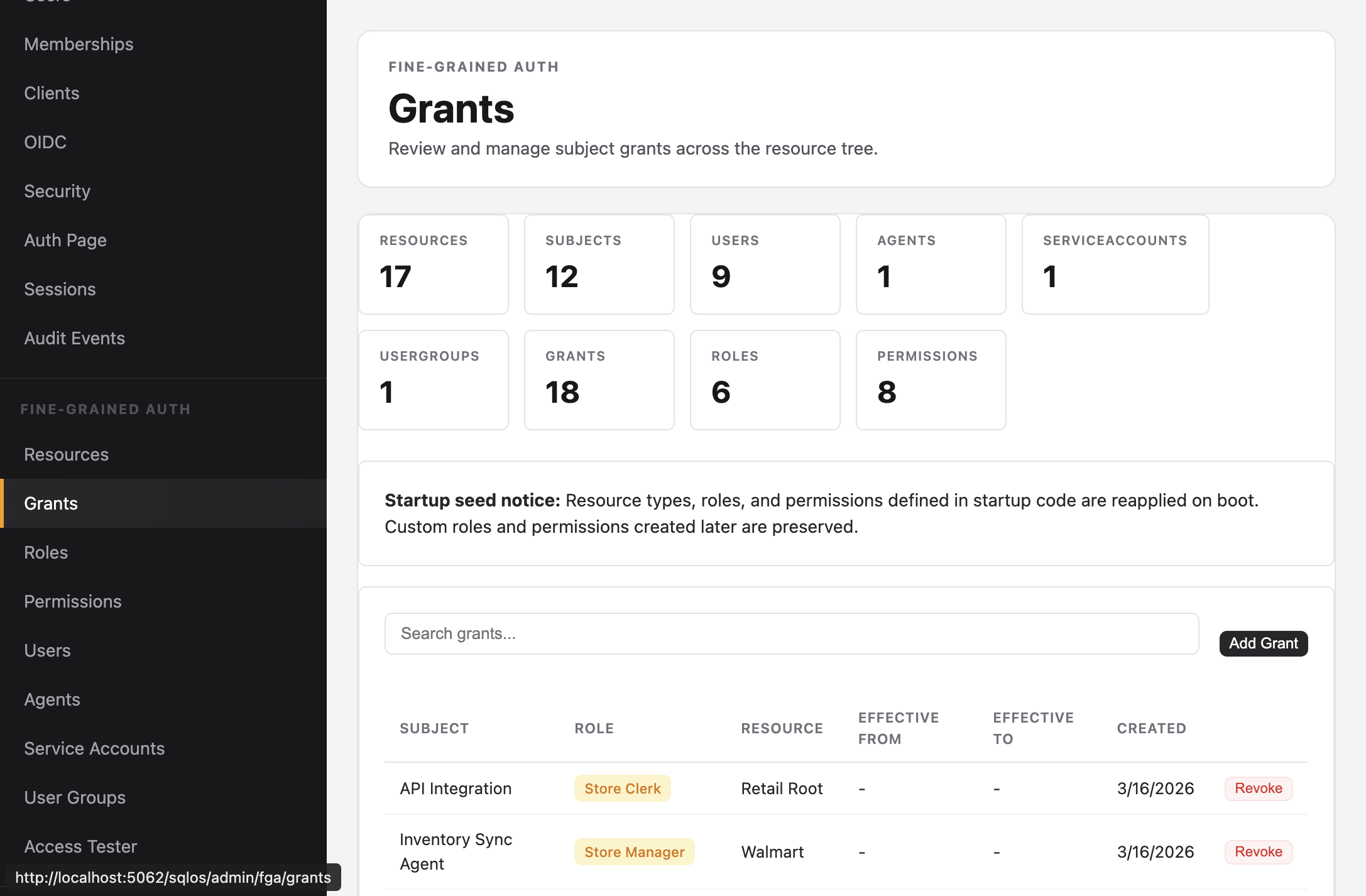
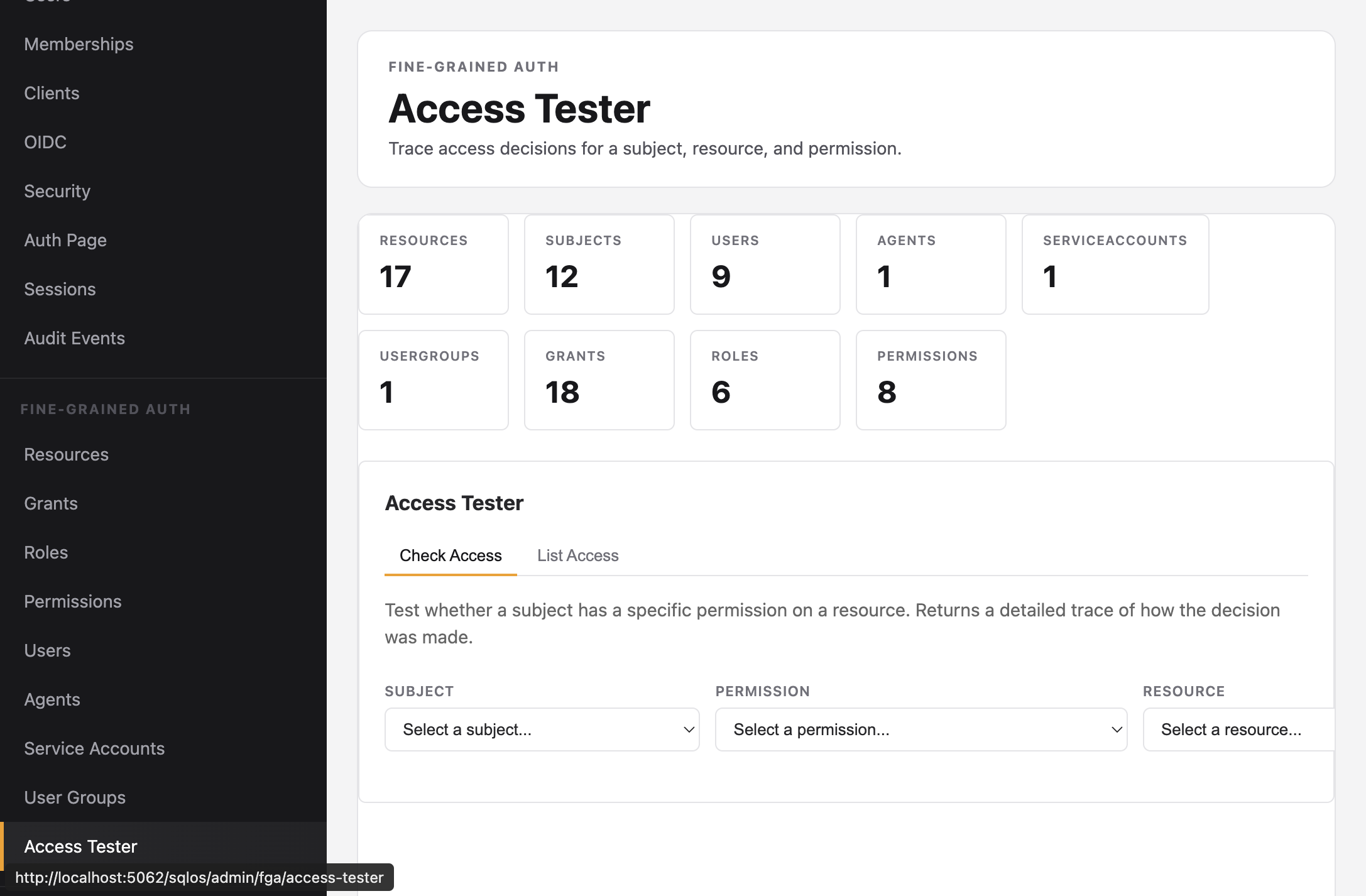
This is useful during development and support. If a customer says, "I should see that project," you do not have to reverse engineer a pile of WHERE clauses. You can inspect the resource path and the grants that do or do not match.
What this solves
SqlOS FGA is not just a more expressive CanEdit helper. It solves the list problem:
- list only authorized rows
- keep authorization inside the SQL query
- combine auth with search, sorting, and pagination
- support inherited access through a resource tree
- avoid per-row HTTP checks
- keep resource writes in the same transaction as business writes
If you are evaluating Auth0 FGA or WorkOS FGA, the next posts compare the architecture tradeoffs. This post is the SqlOS problem statement: your .NET app needs authorized list queries, and those list queries already live in EF Core.
Next reading: