Turn AuthServer memberships into FGA access
Safely reconcile organization roles into tenant-scoped FGA grants.
DbContext derived from SqlOSDbContext<TContext> so AuthServer, FGA, and application data share one contextAuthServer and FGA answer different questions:
| Layer | Question | Source of truth |
|---|---|---|
| AuthServer | Who signed in, which organization did they select, and is that membership active? | User, organization, membership, session, and validated token records |
| FGA | What may this subject do to this application resource? | Subject, resource, role, permission, and grant records |
An AuthServer membership does not automatically create an FGA subject or grant. Likewise, SqlOSFgaSubject.OrganizationId is descriptive metadata; it is not an enforcement boundary and can hold only one value even when a user belongs to several organizations.
This guide uses an explicit bridge:
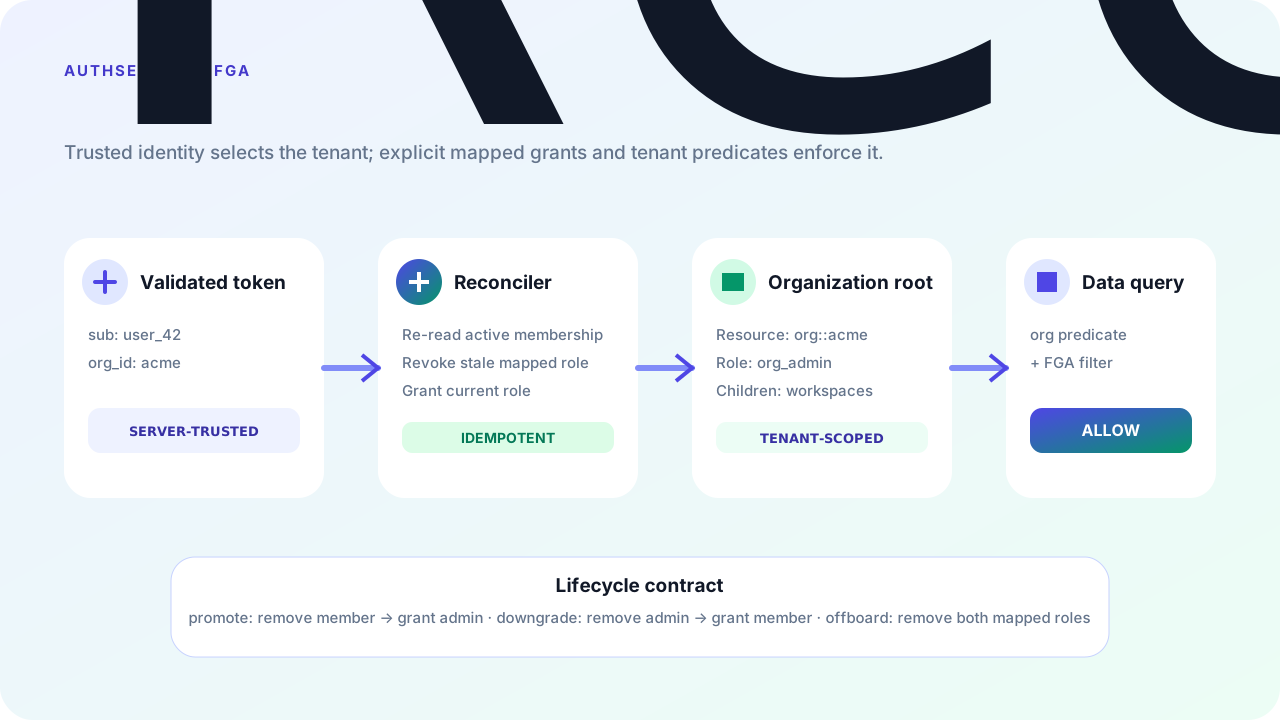
org::{organizationId} resource.The example application has organization roots with workspace children. Members may view workspaces; owners and admins may also manage them.
options.Fga.Seed(seed =>
{
    seed.ResourceType("organization", "Organization");
    seed.ResourceType("workspace", "Workspace");

    seed.Permission(
        "perm_workspace_view",
        "WORKSPACE_VIEW",
        "View workspaces",
        "workspace");
    seed.Permission(
        "perm_workspace_manage",
        "WORKSPACE_MANAGE",
        "Manage workspaces",
        "workspace");

    seed.Role("role_org_member", "org_member", "Organization Member");
    seed.Role("role_org_admin", "org_admin", "Organization Admin");
    seed.RolePermission("org_member", "WORKSPACE_VIEW");
    seed.RolePermission("org_admin", "WORKSPACE_VIEW");
    seed.RolePermission("org_admin", "WORKSPACE_MANAGE");
});
Every tenant gets a resource directly below the global root. Entity-backed child resources name that organization resource as their parent:
using SqlOS.Fga.Interfaces;

public sealed class Workspace : ISqlOSResourceEntity
{
    public string Id { get; set; } = string.Empty;
    public string ResourceId { get; set; } = string.Empty;
    public string OrganizationId { get; set; } = string.Empty;
    public string Name { get; set; } = string.Empty;

    public string ResourceTypeId => "workspace";
    public string ResourceName => Name;
    public string ParentResourceId => $"org::{OrganizationId}";
    public string? ResourceDescription => null;
    public bool ResourceIsActive => true;
}
Assign ResourceId = $"wrk::{workspace.Id}" before saving a new workspace. SqlOSDbContext<TContext> then synchronizes the entity-backed child beneath its org::{organizationId} parent.
root
├── org::acme
│   ├── wrk::planning
│   └── wrk::support
└── org::globex
    └── wrk::operations
Grant organization membership roles on org::{organizationId}, never on root. A global-root grant would let a tenant-local role inherit into every organization's descendants.
Use a dedicated service so login, membership administration, directory sync, and repair jobs all apply the same policy. This version owns exactly two role keys on the organization root: org_member and org_admin.
using Microsoft.EntityFrameworkCore;
using SqlOS.AuthServer.Models;
using SqlOS.Extensions;
using SqlOS.Fga.Models;

public sealed class MembershipFgaSyncService(AppDbContext db)
{
    private const string OrganizationResourceType = "organization";
    private const string OrgMemberRole = "org_member";
    private const string OrgAdminRole = "org_admin";

    private static readonly string[] MembershipManagedRoles =
        [OrgMemberRole, OrgAdminRole];

    public async Task<bool> ReconcileAsync(
        string trustedSubjectId,
        string trustedOrganizationId,
        CancellationToken ct = default)
    {
        var user = await db.Set<SqlOSUser>()
            .SingleOrDefaultAsync(x => x.Id == trustedSubjectId, ct);
        var organization = await db.Set<SqlOSOrganization>()
            .SingleOrDefaultAsync(x => x.Id == trustedOrganizationId, ct);
        var membership = await db.Set<SqlOSMembership>()
            .SingleOrDefaultAsync(
                x => x.UserId == trustedSubjectId
                    && x.OrganizationId == trustedOrganizationId,
                ct);

        var hasActiveMembership = user?.IsActive == true
            && organization?.IsActive == true
            && membership?.IsActive == true;

        if (!hasActiveMembership)
        {
            await RevokeMembershipRolesIfProvisionedAsync(
                trustedSubjectId,
                trustedOrganizationId,
                ct);
            await db.SaveChangesAsync(ct);
            return false;
        }

        var desiredRole = MapMembershipRole(membership!.Role);
        if (desiredRole is null)
        {
            await RevokeMembershipRolesIfProvisionedAsync(
                trustedSubjectId,
                trustedOrganizationId,
                ct);
            await db.SaveChangesAsync(ct);
            return false;
        }

        await db.ProvisionUserSubjectAsync(
            trustedSubjectId,
            displayName: user!.DisplayName,
            email: user.DefaultEmail,
            organizationId: trustedOrganizationId,
            externalRef: trustedSubjectId,
            isActive: true,
            cancellationToken: ct);

        var organizationResourceId = OrganizationResourceId(
            trustedOrganizationId);
        await db.ProvisionResourceWithIdAsync(
            organizationResourceId,
            resourceTypeId: OrganizationResourceType,
            name: organization!.Name,
            parentResourceId: "root",
            isActive: true,
            cancellationToken: ct);

        foreach (var mappedRole in MembershipManagedRoles)
        {
            if (!mappedRole.Equals(desiredRole, StringComparison.Ordinal))
            {
                await db.RevokeRoleAsync(
                    trustedSubjectId,
                    organizationResourceId,
                    mappedRole,
                    ct);
            }
        }

        await db.GrantRoleAsync(
            trustedSubjectId,
            organizationResourceId,
            desiredRole,
            ct);
        await db.SaveChangesAsync(ct);
        return true;
    }

    private async Task RevokeMembershipRolesIfProvisionedAsync(
        string subjectId,
        string organizationId,
        CancellationToken ct)
    {
        var resourceId = OrganizationResourceId(organizationId);
        var subjectExists = await db.Set<SqlOSFgaSubject>()
            .AnyAsync(x => x.Id == subjectId, ct);
        var resourceExists = await db.Set<SqlOSFgaResource>()
            .AnyAsync(x => x.Id == resourceId, ct);

        if (!subjectExists || !resourceExists)
        {
            return;
        }

        foreach (var mappedRole in MembershipManagedRoles)
        {
            await db.RevokeRoleAsync(
                subjectId,
                resourceId,
                mappedRole,
                ct);
        }
    }

    private static string OrganizationResourceId(string organizationId)
        => $"org::{organizationId}";

    private static string? MapMembershipRole(string role)
        => role.Trim().ToLowerInvariant() switch
        {
            "owner" or "admin" => OrgAdminRole,
            "member" => OrgMemberRole,
            _ => null
        };
}
Replace AppDbContext with your SqlOSDbContext<TContext> subclass. ProvisionUserSubjectAsync, ProvisionResourceWithIdAsync, GrantRoleAsync, and RevokeRoleAsync are idempotent, but they only track changes. The final SaveChangesAsync is required.
The reconciler removes only org_member and org_admin on this subject's exact organization resource. Reserve those role keys for membership-derived access. Put manual or product-specific access in different role keys or on narrower resources. Do not delete every grant for the subject: that would erase unrelated access in this tenant and other organizations.
An add-only sync is unsafe during role changes:
member → admin: leaving org_member is redundant and makes the effective policy harder to explain.admin → member: leaving org_admin preserves management access after the downgrade.The allowlist makes ownership explicit. An active reconciliation removes only the other mapped role and grants the desired one. An inactive reconciliation removes both mapped roles.
The role-name switch also fails closed. An unexpected active membership role removes the membership-managed grants and returns false instead of silently treating an unknown value as org_member. Extend the explicit switch when your application defines additional trusted membership roles.
Protect the route with the expected audience, then read the typed token saved by SqlOS validation. Do not accept userId, subjectId, or organizationId from the request body as the actor's authority.
using SqlOS.AuthServer.Extensions;
using SqlOS.Extensions;

var workspaces = app.MapGroup("/api/workspaces");

workspaces.MapGet("/", async (
    HttpContext http,
    MembershipFgaSyncService membershipSync,
    CancellationToken ct) =>
{
    var token = http.GetSqlOSValidatedToken();
    if (string.IsNullOrWhiteSpace(token?.UserId)
        || string.IsNullOrWhiteSpace(token.OrganizationId))
    {
        return Results.Unauthorized();
    }

    var active = await membershipSync.ReconcileAsync(
        token.UserId,
        token.OrganizationId,
        ct);
    return active ? Results.Ok() : Results.Forbid();
});
The access token supplies trusted, validated identifiers, but the reconciler still re-reads the database. That prevents a stale request DTO—or an old assumption about the user's role—from selecting the grant.
For an operator workflow, the target IDs may come from an authorized admin action, but the same rule applies: load the current records and derive the grant from the persisted membership rather than accepting an FGA role key from the browser.
FGA complements the application's tenant predicate; it does not replace it.
Filter by the validated organization and the FGA expression:
var token = http.GetSqlOSValidatedToken()!;
var organizationId = token.OrganizationId!;
var subjectId = token.UserId!;

var filter = await fgaAuth.BuildFilterAsync<Workspace>(
    subjectId,
    "WORKSPACE_VIEW");

var rows = await db.Workspaces
    .Where(x => x.OrganizationId == organizationId)
    .Where(filter)
    .OrderBy(x => x.Name)
    .ToListAsync(ct);
The tenant predicate prevents rows owned by another organization from entering the candidate set. The FGA filter then applies resource-level authorization inside that tenant.
Establish tenant ownership before the point check:
var workspace = await db.Workspaces
    .SingleOrDefaultAsync(
        x => x.Id == workspaceId
            && x.OrganizationId == organizationId,
        ct);

if (workspace is null)
{
    return Results.NotFound();
}

var access = await fgaAuth.CheckAccessAsync(
    subjectId,
    "WORKSPACE_MANAGE",
    workspace.ResourceId);

if (!access.Allowed)
{
    return Results.Forbid();
}
Do the same ownership check before update, delete, sharing, or grant-management operations. Never authorize a resource ID from the request and then load a row without the organization predicate.
Login-time reconciliation keeps the common path fresh, but it is not an offboarding system by itself. Also call the reconciler from trusted workflows that change authorization state:
| Transition | Required reconciliation |
|---|---|
| Membership created or reactivated | Reconcile that user/organization pair and grant the mapped role |
member → admin or owner | Revoke org_member; grant org_admin |
admin or owner → member | Revoke org_admin; grant org_member |
| Membership deactivated or removed | Revoke both membership-managed roles on that organization root |
| User deactivated | Reconcile every organization membership for that user |
| Organization deactivated | Reconcile every membership in that organization |
| User switches organizations | Reconcile the selected pair; do not revoke valid grants in the user's other organizations |
| Membership reactivated | Re-read the current role and grant only its mapping |
| Unexpected/custom role | Remove the mapped grants unless that exact role is deliberately added to the mapping allowlist |
AuthServer rejects inactive users, organizations, and memberships at its session and token boundaries. FGA lifecycle enforcement is tracked separately in open issue #132: current FGA point checks and query filters can still honor an existing grant even when an FGA subject or resource has IsActive = false. Remove the mapped grants explicitly during offboarding.
If one user belongs to several organizations, reconcile each (subjectId, organizationId) pair independently. Updating the FGA subject's OrganizationId metadata during an organization switch does not revoke, scope, or replace grants in another organization.
When AuthServer, FGA, and application data share one SQL database and DbContext, prefer one database transaction around the membership mutation and reconciliation. Commit the membership change and mapped-grant change together.
When the membership source and FGA write cannot share a transaction:
Do not treat a best-effort login callback as the only revocation trigger. An offboarded user might never log in again, leaving the old FGA grant untouched.
Automate these cases with separate users and organizations:
| Test | Proof |
|---|---|
| First active sync | One mapped grant exists on the selected org::{id} resource |
| Repeat active sync | No duplicate grant is created |
| Member promoted | org_member is gone and org_admin is effective |
| Admin downgraded | org_admin is gone before member-level access is evaluated |
| Membership removed | Both membership-managed roles are gone; unrelated grants remain |
| User or organization deactivated | Every affected membership pair is reconciled and mapped grants are gone |
| Organization switch | Each valid tenant keeps its own grant; metadata does not act as policy |
| Request tampering | Body/query subjectId and organizationId cannot change the actor or tenant |
| Unknown membership role | Both mapped grants are absent until the role is explicitly supported |
| Cross-tenant list | A token for Acme cannot return Globex rows even if malformed grants exist |
| Cross-tenant detail/mutation | Tenant ownership is checked before FGA and returns no foreign object |
The runnable example uses this shape in:
examples/SqlOS.Example.Api/Services/ExampleFgaService.csexamples/SqlOS.Example.Api/Endpoints/ExampleAuthEndpoints.csexamples/SqlOS.Example.Api/Endpoints/ExampleEndpoints.csexamples/SqlOS.Example.IntegrationTests/SqlOSExampleApiIntegrationTests.cs