Background jobs with machine clients
Authenticate a worker as an AuthServer machine client, then grant it the smallest FGA role it needs.
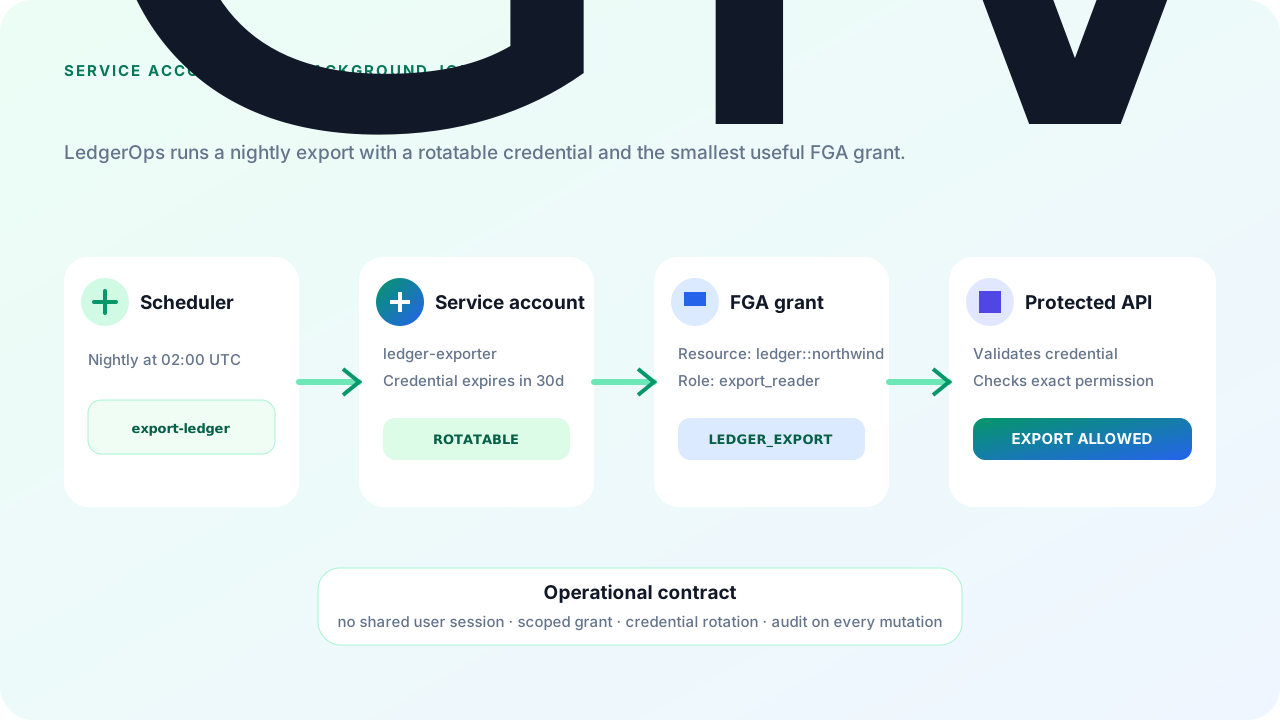
This guide builds LedgerOps, a fictional finance app whose nightly worker exports one organization's ledger. The worker authenticates as a machine client, resolves to service_account::ledger-exporter, and can perform only LEDGER_EXPORT on ledger::northwind.
Those are two objects:
| Object | Plane | Job |
|---|---|---|
| Machine client | AuthServer | Confidential OAuth client. Exchanges a secret at /sqlos/auth/token. |
| Service account | FGA | Subject that receives grants. Has no token endpoint. |
SeedMachineClient and Auth Server > Machine Clients create both and link them by client_id. The Fine-Grained Auth Service Accounts page lists FGA subjects, including ones with no OAuth client. See Machine Clients and Subject types.
SqlOS authenticates an explicitly configured confidential client with client_secret_basic and issues an audience-bound service token. Mapping that client to an FGA service account is a SqlOS authorization feature, not a requirement of the OAuth grant. Public clients and dynamic registration cannot enable this grant.
Open Auth Server > Machine Clients, create the client, and copy the generated 64-character secret exactly once. Put it in the worker's environment or secret manager. Later reads never return it.
Exchange it with HTTP Basic. The form field is resource, not audience, and it must equal the client's registered audience. The token scope is the silent intersection of the request and the client allow-list; unknown scopes are dropped rather than rejected:
curl -u 'ledger-exporter:YOUR_SECRET' \
  -d 'grant_type=client_credentials' \
  -d 'resource=https://api.example.com/ledger' \
  -d 'scope=ledger.export' \
  https://identity.example.com/sqlos/auth/token
The response contains an access token only—never a refresh token. Send Authorization: Bearer <access_token> on API calls. The JWT sub is service_account::ledger-exporter when the FGA subject is bound; it includes client_id, azp, scope, and token_kind=service, but no human email and no sid. Normal audience validation remains mandatory at the resource server.
Lost secret: rotate in the dashboard. Wrong secret: 401 invalid_client.
SeedMachineClient reconciles the confidential OAuth client, FGA service-account subject, slow credential hash, organization binding, and initial grants as one ownership-safe unit. The resolver reads the secret from the host's existing secret provider; SqlOS never writes or logs the plaintext value:
options.AuthServer.SeedMachineClient("ledger-exporter", (client, machine) =>
{
    client.Name = "Ledger Exporter";
    client.Description = "Nightly read-only export for Northwind";
    client.Audience = "https://api.example.com/ledger";
    client.AllowedScopes = ["ledger.export"];

    machine.OrganizationSlug = "northwind";
    machine.ExpiresAt = DateTime.UtcNow.AddDays(90);
    machine.SecretResolver = () =>
        builder.Configuration["SqlOS:MachineClients:LedgerExporter:Secret"];
    machine.Grant("ledger::northwind", "export_reader", "Nightly ledger export");
});
The secret must contain 43 to 256 characters. Missing material fails startup closed; a restart does not generate a new secret. Changing the value in the deployment secret provider performs an explicit code-owned rotation on reconciliation. Removing the declaration marks the machine client orphaned for operator review instead of silently disabling a job.
Alternatively, provide SecretHashResolver when your deployment pipeline already produces an ASP.NET Core PasswordHasher-compatible hash. Specify exactly one resolver.
The dashboard create path is atomic: one OAuth client, one FGA service account, and one one-time secret. Later list/detail responses contain client ID, audience, scopes, organization, expiry, last use, ownership, readiness, and grant count—but never the hash or secret. The list includes only bound pairs, not FGA-only service accounts.
The authenticated admin API uses these routes:
| Operation | Route |
|---|---|
| List/readiness | GET /sqlos/admin/auth/api/machine-clients |
| Atomic create and one-time secret | POST /sqlos/admin/auth/api/machine-clients |
| Explicit rotation and one-time secret | POST /sqlos/admin/auth/api/machine-clients/{clientId}/rotate |
| Credential/audience/scope test without issuing a token | POST /sqlos/admin/auth/api/machine-clients/{clientId}/validate |
| Immediate OAuth and issued-token revocation for dashboard-owned clients | POST /sqlos/admin/auth/api/machine-clients/{clientId}/revoke |
| Emergency runtime disable that survives restart | POST /sqlos/admin/auth/api/machine-clients/{clientId}/emergency-disable |
| Clear an emergency disable | POST /sqlos/admin/auth/api/machine-clients/{clientId}/emergency-enable |
| Narrow grant changes | POST/DELETE /sqlos/admin/auth/api/machine-clients/{clientId}/grants... |
Code-owned identities remain visible and testable in the dashboard, but rotation, grant mutation, and ordinary revoke are blocked because startup would otherwise overwrite an operator's change. Update the declaration or secret provider instead. Dashboard-owned records remain fully operable, including revoke. For a code-owned incident response, emergency-disable the client; that override is audited, idempotent, and is not silently cleared on restart. Re-enable from the same service or dashboard action. Setting IsActive = false in the seed can disable a worker, while true only controls initial creation and does not undo an operator disable. The FGA Service Accounts view still exposes the subject and grant paths.
For advanced application-owned boundaries, provision an FGA service account without going through the machine-client control plane. That creates a subject and optional app-owned credential hash. It does not register an AuthServer machine client unless you also create the OAuth client:
var secret = Convert.ToHexString(RandomNumberGenerator.GetBytes(32));

await db.ProvisionServiceAccountSubjectAsync(
    subjectId: "service_account::ledger-exporter",
    displayName: "Ledger Exporter",
    clientId: "ledger-exporter",
    clientSecretHash: crypto.HashPassword(secret),
    organizationId: "northwind",
    cancellationToken: ct);

await db.GrantRoleAsync(
    "service_account::ledger-exporter",
    "ledger::northwind",
    "export_reader",
    ct);
await db.SaveChangesAsync(ct);
Prefer the dashboard or SeedMachineClient when the worker should use /sqlos/auth/token. The token exchange for a bound machine client is in Use the dashboard secret.
Code-owned secret rotation is an explicit cutover: replace the value returned by the configured secret resolver, deliver it to the worker, and restart or reconcile the application. Dashboard-managed OAuth credentials can instead overlap during deployment: create a second credential, move the worker, and then revoke the old credential. Already-issued short-lived access tokens remain valid until expiry; set the service account ExpiresAt to the current time to revoke its FGA-backed service tokens immediately. Rotation, successful issuance, and failed authentication are recorded in the audit log.
Public DCR intentionally cannot create confidential machine clients. Create them through trusted code/configuration and provision credentials through an authenticated administrative workflow.
The finished request path has four independent controls:
The scheduler never stores a person's refresh token and never impersonates a user.
Seed a permission and role for the job. Keep machine roles separate from broad human roles so reviewing a grant explains exactly what the worker can do.
options.Fga.Seed(seed =>
{
    seed.ResourceType("ledger", "Ledger");
    seed.Permission("LEDGER_EXPORT", "Export ledger data", "ledger");
    seed.Role("export_reader", "Ledger Export Reader");
    seed.RolePermission("export_reader", "LEDGER_EXPORT");
});
The target ledger::northwind must already exist as an FGA resource, either through an ISqlOSResourceEntity or explicit resource provisioning.
Run credential creation from an authenticated admin command—not unconditionally at every startup. Generate at least 256 random bits and write the resulting credential directly to the worker's secret manager.
using System.Security.Cryptography;
using SqlOS.AuthServer.Services;
using SqlOS.Extensions;

var clientId = "ledger-exporter";
var secret = Convert.ToHexString(RandomNumberGenerator.GetBytes(32));
var secretHash = crypto.HashPassword(secret);

await db.ProvisionServiceAccountSubjectAsync(
    subjectId: "service_account::ledger-exporter",
    displayName: "Ledger Exporter",
    clientId: clientId,
    clientSecretHash: secretHash,
    description: "Nightly read-only export for Northwind",
    expiresAt: DateTime.UtcNow.AddDays(90),
    organizationId: "northwind",
    cancellationToken: ct);

await db.GrantRoleAsync(
    "service_account::ledger-exporter",
    "ledger::northwind",
    "export_reader",
    ct);

await secretManager.StoreAsync(
    "LedgerExporter:Credential",
    $"{clientId}.{secret}",
    ct);

await db.SaveChangesAsync(ct);
Never print the credential to stdout, especially from CI or a deployment job where output is retained. Never commit it, write it to normal application logs, or return it from a later read endpoint. If your secret manager has no SDK, use an explicitly interactive one-time admin command with shell history and session recording disabled.
If OAuth is not appropriate for an internal boundary, the following pattern remains available. It is application-owned and should not be combined with the OAuth credential for the same worker.
Use a dedicated authentication handler or middleware in production. The essential behavior is:
ClientId;The protected endpoint below keeps the boundary visible for the example:
using Microsoft.EntityFrameworkCore;
using SqlOS.AuditLogs;
using SqlOS.AuthServer.Services;
using SqlOS.Fga.Interfaces;
using SqlOS.Fga.Models;

app.MapPost("/internal/ledger/{organizationId}/export", async (
    string organizationId,
    HttpContext http,
    AppDbContext db,
    ISqlOSFgaAuthService fga,
    ISqlOSAuditLogService auditLogs,
    SqlOSCryptoService crypto,
    CancellationToken ct) =>
{
    if (!TryReadServiceCredential(http, out var clientId, out var secret))
        return Results.Unauthorized();

    var account = await db.Set<SqlOSFgaServiceAccount>()
        .SingleOrDefaultAsync(x => x.ClientId == clientId, ct);

    if (account is null || account.ExpiresAt is { } expiry && expiry <= DateTime.UtcNow)
        return Results.Unauthorized();

    if (!crypto.VerifyPassword(account.ClientSecretHash, secret))
        return Results.Unauthorized();

    if (!TryReadIdempotencyKey(http, out var jobKey))
    {
        return Results.BadRequest(new
        {
            message = "A valid Idempotency-Key header is required."
        });
    }

    var resourceId = $"ledger::{organizationId}";
    var decision = await fga.CheckAccessAsync(
        account.SubjectId,
        "LEDGER_EXPORT",
        resourceId);

    if (!decision.Allowed)
    {
        await RecordExportAuditAsync(
            auditLogs,
            http,
            account,
            organizationId,
            resourceId,
            result: "denied",
            idempotencyKey: $"ledger-export:{jobKey}:denied:{http.TraceIdentifier}",
            ct);
        return Results.Forbid();
    }

    account.LastUsedAt = DateTime.UtcNow;
    await db.SaveChangesAsync(ct);

    var queued = await exports.EnqueueOnceAsync(
        organizationId,
        account.SubjectId,
        jobKey,
        ct);

    await RecordExportAuditAsync(
        auditLogs,
        http,
        account,
        organizationId,
        resourceId,
        result: queued ? "queued" : "already_queued",
        idempotencyKey: $"ledger-export:{jobKey}:outcome",
        ct);

    return Results.Accepted(value: new { jobKey, queued });
});
FGA authorization also checks ExpiresAt, so an expired service account cannot retain access through an old grant even if an API boundary accidentally omits its own expiry check. Keep the boundary check anyway so authentication fails before authorization and returns one generic credential error. SqlOSFgaServiceAccount has no separate disabled flag; set ExpiresAt to the current time for immediate authorization revocation, then rotate or remove its credential according to your application policy.
TryReadServiceCredential can accept an app-owned scheme such as Authorization: ServiceAccount <clientId>.<secret>:
static bool TryReadServiceCredential(
    HttpContext http,
    out string clientId,
    out string secret)
{
    clientId = string.Empty;
    secret = string.Empty;

    const string prefix = "ServiceAccount ";
    var header = http.Request.Headers.Authorization.ToString();
    if (!header.StartsWith(prefix, StringComparison.Ordinal))
        return false;

    var credential = header[prefix.Length..].Trim();
    var separator = credential.IndexOf('.');
    if (separator is < 1 or > 100)
        return false;

    clientId = credential[..separator];
    secret = credential[(separator + 1)..];
    return secret.Length is >= 43 and <= 256;
}

static bool TryReadIdempotencyKey(HttpContext http, out string jobKey)
{
    jobKey = http.Request.Headers["Idempotency-Key"].ToString().Trim();
    return jobKey.Length is >= 10 and <= 128
        && jobKey.All(character =>
            char.IsAsciiLetterOrDigit(character)
            || character is '-' or '_' or ':' or '.');
}

static async Task RecordExportAuditAsync(
    ISqlOSAuditLogService auditLogs,
    HttpContext http,
    SqlOSFgaServiceAccount account,
    string organizationId,
    string resourceId,
    string result,
    string idempotencyKey,
    CancellationToken ct)
{
    await auditLogs.RecordAsync(new SqlOSAuditLogRecordRequest(
        Action: result == "denied"
            ? "ledger.export.denied"
            : "ledger.export.requested",
        OrganizationId: organizationId,
        ApplicationKey: "ledgerops-worker-api",
        Source: "application",
        Actor: new SqlOSAuditActor(
            "service_account",
            account.SubjectId,
            "Ledger Exporter"),
        Targets:
        [
            new SqlOSAuditTarget("ledger", resourceId, organizationId)
        ],
        Context: SqlOSAuditContext.FromHttpContext(http),
        Metadata: new Dictionary<string, object?>
        {
            ["result"] = result
        },
        IdempotencyKey: idempotencyKey),
        ct);
}
Enforce maximum lengths before database work, use fixed-time verification through the password hasher, rate-limit failures, and never echo which half was wrong. Register a log-redaction rule for the whole Authorization header before enabling request logging. EnqueueOnceAsync must enforce a unique job key in durable storage; an in-memory “already seen” check is not sufficient across replicas or restarts.
Once authentication succeeds, authorization uses account.SubjectId. The same CheckAccessAsync(subjectId, permission, resourceId) call works for a user, group, agent, or service account.
The scheduler reads its credential at runtime and sends it only to the narrow internal API:
using var request = new HttpRequestMessage(
    HttpMethod.Post,
    "https://api.ledgerops.test/internal/ledger/northwind/export");

var runDate = DateOnly.FromDateTime(DateTime.UtcNow);
request.Headers.TryAddWithoutValidation(
    "Idempotency-Key",
    $"nightly-ledger:northwind:{runDate:yyyy-MM-dd}");

request.Headers.TryAddWithoutValidation(
    "Authorization",
    $"ServiceAccount {configuration["LedgerExporter:Credential"]}");

using var response = await httpClient.SendAsync(request, ct);
response.EnsureSuccessStatusCode();
Do not send the credential through queue payloads, job arguments visible in dashboards, query strings, or telemetry attributes. Reuse the same idempotency key for every retry of one logical run.
When the queue is external, the strongest design stores the durable job intent, audit record, and unique job key in one database transaction/outbox, then publishes asynchronously. The example's EnqueueOnceAsync boundary demonstrates the minimum retry guarantee: an audit or network failure after enqueue cannot create a second export on retry.
For zero-downtime rotation, model two active credentials or add a credential-version table owned by the app:
Overwriting ClientSecretHash directly is a single-slot rotation and invalidates the old secret immediately. That is safe only when the worker and API can be changed atomically.
ClientId unique.EffectiveTo when access is temporary.403.401 shape.LedgerOps can run unattended without a human token. Compromise of its credential exposes only the one explicitly granted export path, and rotating or expiring that credential does not affect any user session.