AuthServer Overview
Identity, sessions, organizations, and SSO in one embedded module.
AuthServer is the identity module in SqlOS. It handles user authentication, organizations, sessions, token management, OIDC social login, and SAML enterprise SSO -- all embedded in your .NET app, all stored in your database.
What you get
- Organizations -- multi-tenant with memberships and roles
- Users -- email/password, SSO-provisioned, or OIDC-linked
- Sessions -- access tokens (JWT), refresh token rotation, replay detection
- OIDC -- Google, Microsoft, Apple, and custom providers
- SAML SSO -- enterprise SSO with auto-provisioning
- Hosted or Headless auth UI -- use the built-in auth pages or render your own
Setup
builder.AddSqlOS<AppDbContext>(options =>
{
    options.UseAuthServer();
});

var app = builder.Build();
app.MapSqlOS();
Auth flow
The typical authentication flow works like this:
- Frontend redirects to
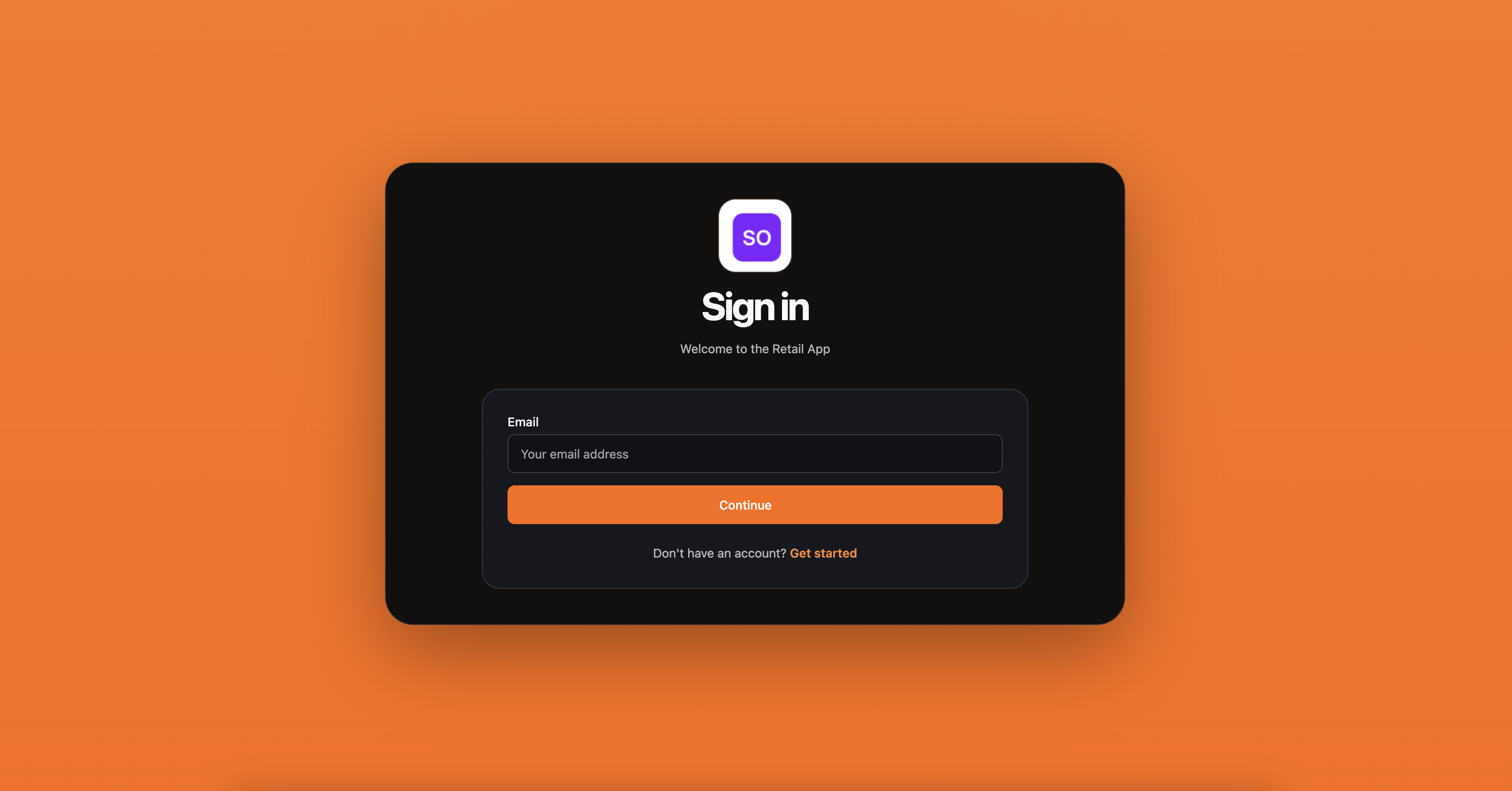
/sqlos/auth/authorizewith PKCE - User enters email -- AuthServer runs home realm discovery to determine password vs SSO
- User authenticates (password, OIDC, or SAML)
- If the user belongs to multiple organizations, they select one
- AuthServer issues an authorization code
- Frontend exchanges the code for access + refresh tokens
Dashboard
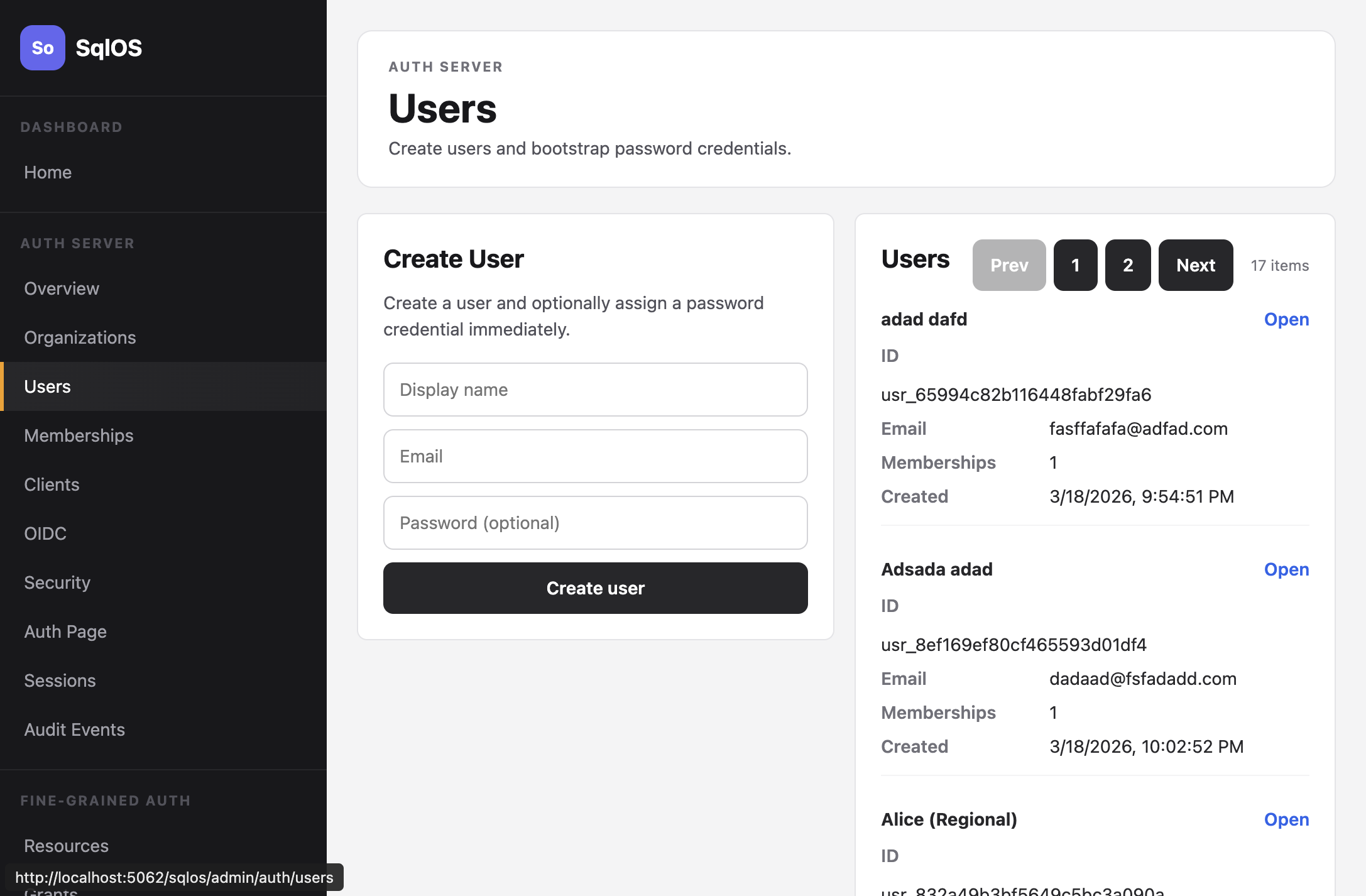
The auth admin UI at /sqlos/admin/auth/ lets you manage organizations, users, memberships, clients, OIDC connections, SSO, security settings, and active sessions.
SDK services
| Service | Purpose |
|---|---|
SqlOSAuthService | Login, refresh, logout, token validation |
SqlOSAdminService | Create orgs, users, memberships, clients, SSO |
SqlOSCryptoService | Token generation, PKCE, password hashing, JWKS |
SqlOSHomeRealmDiscoveryService | Route users to password or SSO by email domain |
SqlOSSsoAuthorizationService | SAML SSO authorization and code exchange |
SqlOSOidcAuthService | Google, Microsoft, Apple, and custom OIDC |
SqlOSSettingsService | Session lifetimes and security configuration |
Presentation modes
SqlOS separates the auth protocol from the login UI:
- Hosted AuthPage (default) -- SqlOS renders the sign-in and sign-up pages
- Headless Auth -- SqlOS owns the OAuth protocol while your app renders the UI
Read more in Headless Auth and Hosted vs Headless.